Many markets.
The same capital.
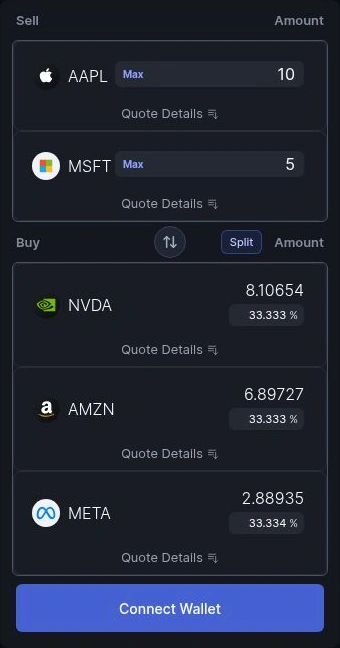
Each Reserve Asset participates in pair and basket trades within one pool. An order can pay several assets and receive several others.
Multi-asset exchangeOnchain portfolios. Active trading markets.
Own exposure to tokenized stocks, stablecoins, and real-world assets. Put the portfolio’s capital to work in markets that generate trading income. Trades pay for the assets they receive at post-trade prices.
Explore quotes directly in the stablecoin testnet.
FROM TOKENIZED ASSETS TO TRADABLE PORTFOLIOS
Hold a pool token for exposure to the portfolio. Its assets also support active trading markets, creating a source of income alongside that market exposure.
Multiswap supplies the exchange and accounting structure. Asset issuers supply the tokens and define what they represent.
Explore tokenized-stock and RWA use casesTokenized-stock markets are a use case. The current public testnet entry point is USD.cav.

CAV USD Index
A portfolio of stablecoins.
One token representing the pool.
 USDC
USDC USDT
USDT DAI
DAI USDS+ more
Illustrative reserve assets. Explore the pool for its current composition.
MEET USD.cav
USD.cav brings dollar-linked assets into a shared pool. Trade between its Reserve Assets, or provide proportional liquidity to receive the pool’s LP token.
The LP token represents the portfolio’s backing. Trading generates fees in Rewards, and the pool’s distribution rules determine LP income. The stablecoins retain their own issuer and price risks.
Explore how USD.cav worksHOW IT WORKS
Reserves, prices, and portfolio weights follow the same accounting model.
Each Reserve Asset participates in pair and basket trades within one pool. An order can pay several assets and receive several others.
Multi-asset exchangeTrades change reserve quantities and accounting scales together. One pool elasticity governs that relationship; asset weights are derived from scale.
Reserves, scale, and priceTrades pay the pool the full value of the assets they receive, valued at post-trade prices. Trading fees generate income on top.
How a trade is pricedPORTFOLIOS AS BUILDING BLOCKS
An LP token can be registered as a Reserve Asset elsewhere. That makes it possible to build portfolios of portfolios, each with its own composition and trading market.
Understand pool compositionIllustrative architecture. The current Robinhood app manifest publishes USD.cav.
START WITH A QUOTE
Open USD.cav, build a basket, and inspect how the trade changes the pool.
Explore USD.cav